
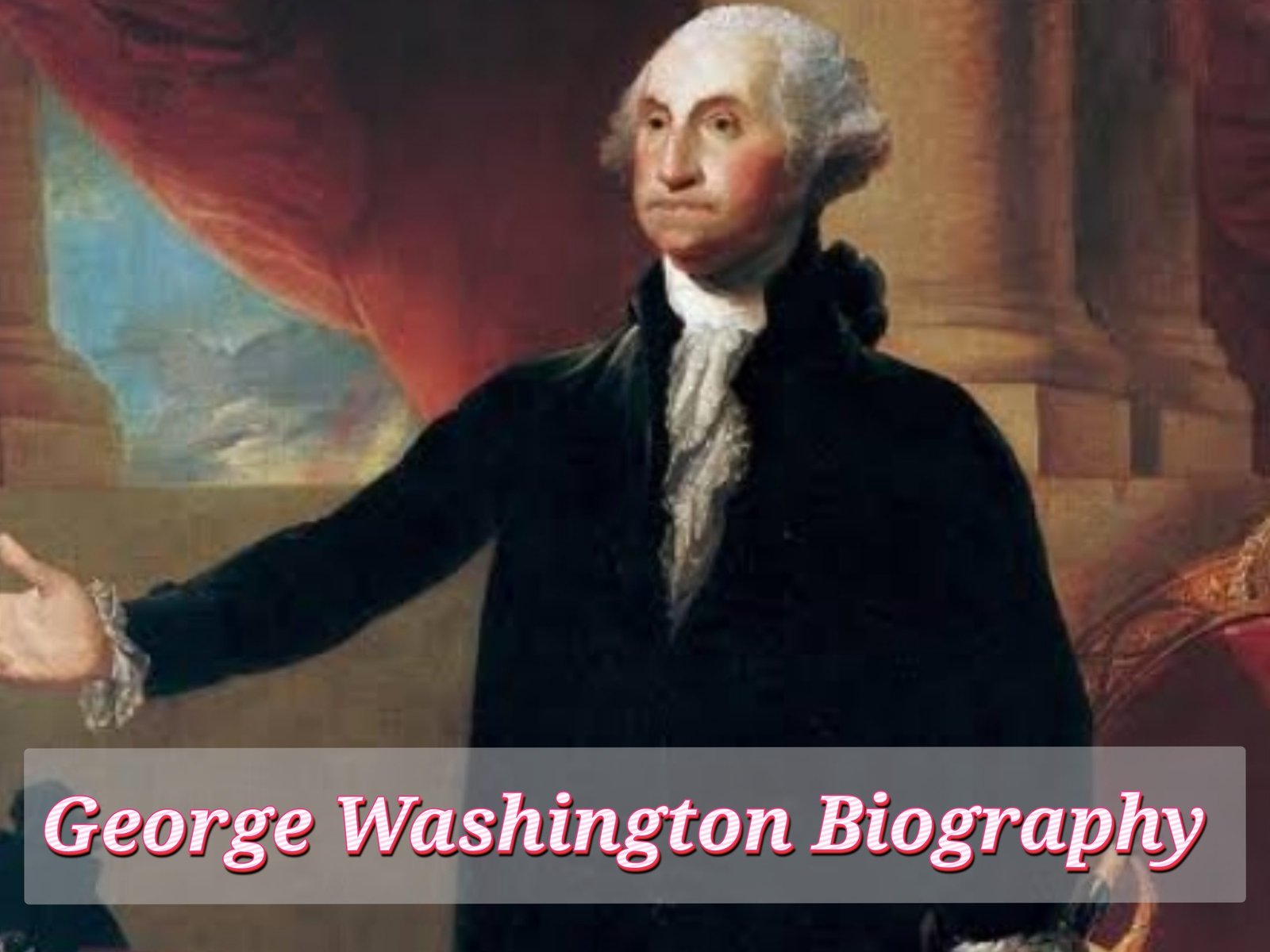
George Washington Biography
George Washington was born on February 22, 1732, in Westmoreland County, Virginia, in what was then British America. He became the first President of the United States and is widely regarded as the Father of His Country. His leadership during the American Revolutionary War and his role in shaping the new nation established principles of republican government and civilian control of the military that continue to influence the United States today.
Washington’s life spanned colonial times through the early years of independence. He embodied ideals of duty, integrity, and public service. From his early experiences as a surveyor and soldier to his command of the Continental Army and his two terms as president, Washington guided America through its most formative challenges with calm resolve and strategic vision.
George Washington Early Life
George Washington entered the world on February 22, 1732, at Pope’s Creek Plantation in Westmoreland County, Virginia. His father, Augustine Washington, was a planter and landowner who had been married twice. George was the first child of Augustine’s second marriage to Mary Ball Washington. The family lived in a rural, agricultural environment typical of colonial Virginia, where tobacco farming formed the backbone of the economy.
As a young boy, Washington experienced the loss of his father when Augustine died in 1743. This event left the eleven-year-old George under the influence of his mother and older half-brothers. He grew up learning practical skills such as farming, hunting, and horsemanship. The Washington family held a respectable social position among Virginia’s gentry, though they were not among the wealthiest. Young George developed a strong sense of responsibility and self-discipline early on, traits that would define his character throughout his life.
Limited formal schooling marked his youth. He studied basic subjects including mathematics, which later proved useful in his work as a surveyor. Washington also copied rules of civility and decent behavior from a popular etiquette book, internalizing principles of politeness and moral conduct. These early experiences in the Virginia countryside shaped his appreciation for land, agriculture, and the outdoors. By his mid-teens, he began working as a surveyor, helping to map the expanding western frontiers of Virginia. This occupation provided him with valuable knowledge of the terrain and introduced him to the challenges of frontier life.
Washington’s early life also exposed him to the tensions within the British colonial system. His half-brother Lawrence Washington, who had served in the British navy, became a significant mentor. Lawrence’s ownership of Mount Vernon after inheriting it from their father further connected George to the world of plantation management. When Lawrence died in 1752, George eventually inherited the estate, which he expanded and improved over the decades. These formative years built the foundation of resilience, practical knowledge, and leadership potential that would later prove essential during the fight for American independence.
George Washington Education
George Washington received a practical rather than classical education common among Virginia planters. He attended local schools and received instruction from private tutors. His studies focused on arithmetic, geometry, history, and basic literature. He showed particular aptitude for mathematics, skills that served him well in surveying and military engineering.
Unlike many contemporaries from wealthier families who attended college in Europe or at institutions like the College of William & Mary, Washington did not pursue higher formal education. Instead, he learned through hands-on experience and self-study. He read extensively on military tactics, agriculture, and history throughout his life. His library at Mount Vernon eventually contained hundreds of books covering diverse subjects. This lifelong commitment to learning compensated for the lack of university training and contributed to his reputation as a thoughtful and informed leader.
Washington’s education emphasized character development alongside practical skills. He absorbed lessons on honor, duty, and self-control from both family influences and popular conduct manuals of the time. These elements combined to create a well-rounded individual prepared for the demands of public life in a turbulent era.
George Washington Age
George Washington lived for 67 years, passing away on December 14, 1799. His life covered critical periods in American history, from the French and Indian War through the establishment of the federal government. At age 43, he took command of the Continental Army in 1775. He was 57 years old when elected as the first president in 1789 and served two terms until 1797. His age and experience brought stability and gravitas to the young nation during its vulnerable early years. Even in his final years at Mount Vernon, Washington remained active in managing his estates and offering counsel on national matters.
George Washington Career
George Washington’s career began in the military and surveying fields. In 1753, at age 21, he was commissioned as a major in the Virginia militia. He gained early military experience during the French and Indian War, serving as an aide to British General Edward Braddock. Although the campaign ended in defeat, Washington demonstrated courage under fire and learned valuable lessons about warfare in North America.
After the war, he returned to civilian life as a planter at Mount Vernon. He married Martha Dandridge Custis in 1759 and focused on expanding his agricultural operations. Washington experimented with new farming techniques, including crop rotation, to improve soil health on his plantations. He also served in the Virginia House of Burgesses, where he gained political experience and became increasingly concerned about British policies toward the colonies.
The tensions with Britain escalated, leading Washington to support the patriot cause. In 1775, the Continental Congress appointed him commander-in-chief of the Continental Army. Despite facing shortages of supplies, inexperienced troops, and superior British forces, Washington led the army through eight years of war. Key moments included the surprise crossing of the Delaware River on Christmas night 1776, leading to victories at Trenton and Princeton, and the decisive siege at Yorktown in 1781, which effectively ended major combat. His leadership unified the colonies and secured independence.
After the war, Washington resigned his commission in 1783, demonstrating his commitment to civilian rule. He presided over the Constitutional Convention in 1787, lending his prestige to the creation of the new Constitution. In 1789, he was unanimously elected as the first President of the United States. During his presidency, he established many precedents, including the formation of a cabinet, neutrality in foreign affairs, and the peaceful transfer of power. He signed key legislation creating the Bank of the United States and supported Alexander Hamilton’s financial plans. Washington served two terms and declined a third, reinforcing the tradition of limited presidential tenure.
His post-presidency years involved retirement at Mount Vernon, where he continued managing his lands until his death.
George Washington Military Achievements
Washington’s military achievements were central to American independence. He transformed a ragtag group of militiamen into a capable fighting force capable of standing against the world’s most powerful army. His strategy emphasized endurance, mobility, and avoiding decisive battles unless conditions favored success. The winter at Valley Forge in 1777-1778 tested his leadership as he trained troops under harsh conditions with the help of foreign officers like Baron von Steuben.
The victory at Yorktown, achieved through coordination with French allies, represented the culmination of his efforts. Washington’s ability to maintain army cohesion despite repeated setbacks earned him enduring respect. His military career highlighted not only tactical skill but also political acumen in managing relations with Congress and state governments.
George Washington Siblings
George Washington had several siblings from his father’s two marriages. His full siblings included Betty, Samuel, John Augustine, Charles, and Mildred, though Mildred died young. He also had half-siblings Lawrence and Augustine from his father’s first marriage. Lawrence served as a key mentor, while his sister Betty remained close throughout life. Family ties provided emotional support and connections within Virginia society.
George Washington Wife
George Washington married Martha Dandridge Custis on January 6, 1759. Martha was a wealthy widow with two young children, John Parke Custis and Martha Parke Custis. The marriage proved strong and supportive. Martha accompanied Washington during parts of the Revolutionary War, providing comfort to soldiers and officers. She managed the household at Mount Vernon during his long absences. Their relationship was marked by mutual respect and affection, though they had no biological children together.
George Washington Children
Washington raised Martha’s two children as his own. He also helped raise two of his step-grandchildren later in life. Although he had no biological offspring, Washington expressed deep affection for his family. He provided for their education and welfare, and the extended family at Mount Vernon often included relatives and visitors. His role as a stepfather highlighted his sense of responsibility and care.
George Washington Family
The Washington family traced its roots to English settlers. George maintained close relationships with his mother, though they had occasional differences, and with his siblings. Mount Vernon became a central gathering place for relatives. Washington’s family life intertwined with his public duties, as many relatives served in military or governmental roles during the Revolutionary period. He freed his slaves in his will, reflecting evolving views on the institution of slavery that affected his household.
George Washington Personal Life
Washington enjoyed a relatively private personal life despite his public prominence. He loved farming, fox hunting, and entertaining guests at Mount Vernon. His correspondence revealed a man of strong principles who valued friendship and loyalty. He suffered from dental problems throughout adulthood and experienced bouts of illness, including during military campaigns. Washington was known for his reserved demeanor, physical stature (standing about six feet two inches), and commanding presence. He avoided ostentation and lived according to Enlightenment ideals of reason and virtue.
George Washington Awards
While formal awards were limited in his era, Washington received numerous honors. Congress awarded him the Thanks of Congress multiple times for military victories. He received honorary degrees from institutions like Harvard and Yale. Foreign governments recognized his achievements, and after his death, he was eulogized as an indispensable leader. Monuments, the naming of the capital city, and his image on currency and stamps reflect his lasting legacy. His birthday became a federal holiday.
George Washington Net Worth
At the time of his death, George Washington’s estate was valued at approximately $780,000, a substantial sum in 1799 equivalent to many millions today when adjusted for inflation. His wealth derived primarily from land holdings, including Mount Vernon and western properties, as well as investments in stocks and bonds. Washington’s financial success as a planter and manager allowed him to maintain independence and focus on public service without seeking personal profit from office.
Conclusion
George Washington’s life represents the highest ideals of leadership and sacrifice for the common good. From his humble beginnings in colonial Virginia to guiding a new nation, he demonstrated unwavering commitment to liberty and republican principles. His decisions established enduring traditions that strengthened American democracy. Washington remains a symbol of integrity and national unity, inspiring generations with his dedication to duty above personal ambition.
FAQs
What was George Washington’s role in the American Revolution?
George Washington served as commander-in-chief of the Continental Army, leading the fight for independence against Britain through strategic leadership and perseverance.
When and where was George Washington born?
George Washington was born on February 22, 1732, in Westmoreland County, Virginia.
Did George Washington have any biological children?
No, George Washington had no biological children but raised his wife Martha’s children and grandchildren.
Why is George Washington called the Father of His Country?
He earned this title for his pivotal roles in winning independence and establishing the framework of the United States government.
What were George Washington’s major accomplishments as president?
As president, he established key institutions like the cabinet, maintained neutrality in foreign conflicts, and supported economic policies that stabilized the young nation.
How did George Washington die?
George Washington died on December 14, 1799, at Mount Vernon from complications related to a throat infection after riding in cold weather.
What was George Washington’s stance on slavery?
Washington owned slaves but grew increasingly uncomfortable with the institution. In his will, he arranged for the freedom of his slaves upon his wife’s death, reflecting his evolving perspective.