
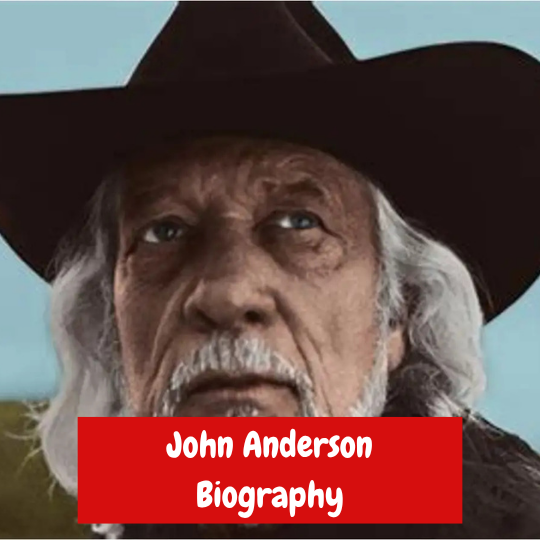
John Anderson was an American country music singer whose distinctive voice and traditional sound made him one of the genre’s recognisable performers. Over a career spanning nearly five decades, he recorded hit songs including “Swingin’,” “Seminole Wind,” “Straight Tequila Night” and “Money in the Bank.” His music earned him a devoted audience, industry honours and a place in the Country Music Hall of Fame.
Anderson died on October 21, 2026, at the age of 71. His family announced his passing the same day, describing him as a beloved husband, father, grandfather and friend. His death came just days after he attended the Country Music Hall of Fame induction ceremony in Nashville, leaving fans to reflect on the music and influence of a singer who remained committed to country music throughout his life.
Who Was John Anderson?
John Anderson was an American country singer and songwriter known for combining traditional country sounds with a distinctive vocal style. He gained national attention in the early 1980s and later enjoyed another period of commercial success in the 1990s. His recordings appealed to listeners who valued country music’s storytelling traditions, strong melodies and expressive singing.
Anderson’s career included five No. 1 country hits and numerous other charting singles. He became particularly associated with songs that blended everyday storytelling with memorable musical arrangements. His influence also extended to younger performers who admired his commitment to traditional country music.
His achievements earned him induction into the Nashville Songwriters Hall of Fame in 2014 and the Country Music Hall of Fame in 2024. These honours recognised both his songwriting contributions and his enduring place in country music history.
John Anderson Age and Early Life
John Anderson was born on December 13, 1954, in Apopka, Florida, near Orlando. He grew up in a community surrounded by orange groves and developed an interest in music during his childhood. By his early teenage years, he was playing in local bands and had begun imagining a future as a professional musician.
Although he initially played rock music, Anderson became increasingly interested in country after listening to artists such as Merle Haggard and George Jones. Their traditional approach to singing and storytelling influenced his musical direction.
After finishing high school, Anderson moved to Nashville, Tennessee, to pursue his ambition. He initially shared an apartment with his older sister Donna, who was also pursuing music. He performed in local clubs while trying to secure opportunities as a recording artist.
His early years in Nashville required persistence. Anderson gradually built professional relationships and attracted the attention of music publisher Al Gallico, who helped him connect with the recording industry. In 1976, he signed with Warner Bros. Records, beginning the recording career that would establish his name in country music.
John Anderson’s Music Career and Breakthrough
Anderson released his self-titled debut album in 1980. His early recordings attracted attention for their traditional country influences and his distinctive vocal delivery. One of his first significant hits was “Your Lying Blue Eyes,” which helped establish him on country radio.
His breakthrough arrived in 1982 with “Swingin’,” an upbeat song that became his signature recording. The single reached the top of the country charts and crossed into the wider pop market. It earned him the Country Music Association’s Horizon Award and Single of the Year honour in 1983.
Anderson followed this success with songs such as “Wild and Blue,” “Black Sheep” and “I’m Just an Old Chunk of Coal (But I’m Gonna Be a Diamond Someday).” His music helped shape the new traditionalist movement that brought country music’s established sounds back into prominence during the 1980s.
By the end of that decade, changing trends and difficulties with record-company support affected his commercial momentum. He continued recording, but his biggest successes during that period became less frequent. Rather than abandoning his musical identity, he remained committed to the country style that had first attracted audiences.
The 1990s brought a significant revival. Anderson signed with BNA Entertainment, and his album Seminole Wind, released in 1992, produced some of his best-known recordings. “Straight Tequila Night” became a major hit, while the title track connected environmental themes with his characteristic country sound.
Other successful songs from this period included “Money in the Bank,” “When It Comes to You” and “I Wish I Could Have Been There.” The renewed success expanded his audience and confirmed that his career could thrive beyond its initial peak.
In later years, Anderson continued recording and performing. His 2020 album Years, produced with Dan Auerbach and Dave Ferguson, brought him back into the studio with a sound that respected his roots while allowing room for new musical ideas. The album included “Tuesday I’ll Be Gone,” a duet with Blake Shelton.
John Anderson’s Most Popular Songs
Anderson’s catalogue includes songs that remain closely associated with his name. Some of his best-known recordings include:
- “Swingin’”: His signature hit, recognised for its lively rhythm, playful lyrics and distinctive vocal delivery.
- “Seminole Wind”: A reflective song addressing environmental change and the transformation of Florida’s landscape.
- “Straight Tequila Night”: A major 1990s hit about a woman whose heartbreak can surface after drinking tequila.
- “Money in the Bank”: An upbeat country song that became another major chart success.
- “Wild and Blue”: A recording that showcases Anderson’s traditional country sound.
- “Your Lying Blue Eyes”: One of his early hits that helped establish his reputation.
- “I Just Came Home to Count the Memories”: A song that demonstrates his strength in delivering emotionally direct country material.
These recordings helped Anderson build a career that survived changing fashions in country music. His voice remained central to his appeal, giving his songs an identity that listeners could recognise across different periods of his career.
John Anderson’s Wife and Family
John Anderson was married to Jamie Anderson, and the couple had two daughters, Alexa and Brionna. He was also a grandfather. Although his career involved touring, recording and public appearances, he maintained a strong connection to his family.
In their announcement following his death, his family described him as the heart of their household and emphasised the love and memories he had given them. Their statement highlighted the personal side of a musician whose public identity was largely shaped by his songs and performances.
Anderson’s family life remained comparatively private, with his music taking centre stage in his public career. The tribute from his loved ones made clear that his significance to them extended well beyond his accomplishments as a performer.
John Anderson’s Health and Death
Anderson faced serious health difficulties beginning in 2017. He cancelled performances while dealing with an illness that required extensive medical attention. He later discussed fears that doctors had initially considered, including the possibility of brain cancer, before the tumour was found to be benign.
He also experienced heart problems and hearing loss, making his recovery particularly challenging. Despite these setbacks, he returned to music and continued recording and performing when his health allowed.
On October 21, 2026, Anderson died peacefully in his sleep at his home in Smithville, Tennessee, at the age of 71. His family confirmed his death, but a specific cause was not publicly disclosed. He had attended the Country Music Hall of Fame induction ceremony in Nashville on October 18, where he spent time with fellow country artists.
His passing prompted tributes from musicians and fans who recognised the influence of his voice and catalogue. His induction into the Country Music Hall of Fame in 2024 had already affirmed his place among the genre’s established figures.
Conclusion
John Anderson built a lasting country music career through distinctive singing, memorable songwriting and a commitment to traditional country sounds. From “Swingin’” in the early 1980s to “Seminole Wind” and “Straight Tequila Night” in the 1990s, his songs reached audiences across generations.
His death at 71 marks the end of a career that lasted nearly five decades. His recordings, songwriting and influence on other performers remain central to his legacy, while the tributes from his family reflect the personal relationships that mattered beyond the stage.