
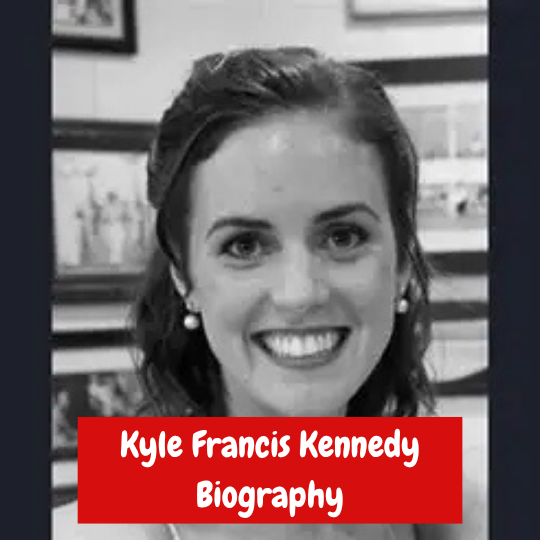
Kyle Francis Kennedy was an American educator, education-reform advocate and disability-rights campaigner who belonged to one of the most prominent families in American political history. As the granddaughter of former US senator Robert F. Kennedy and Ethel Kennedy, she was part of the Kennedy family, but her own professional life focused on improving education for children and supporting people living with disabilities.
Kennedy died on September 21, 2026, at her home in Westwood, Massachusetts, aged 42. News of her death emerged publicly in October. She had spent years working in education before a severe spinal cord injury in 2020 changed her life and led her to advocate for people facing disability-related barriers.
Who Was Kyle Francis Kennedy?
Kyle Francis Kennedy was the daughter of Michael LeMoyne Kennedy and Victoria Denise Gifford Kennedy. Her father was one of the eleven children of Robert F. Kennedy and Ethel Kennedy. This made Kyle a granddaughter of the former US attorney general and a niece of Robert F. Kennedy Jr.
Although her family background connected her to American political history, Kennedy developed her own professional identity through teaching, education policy and advocacy. She worked with children in New York City public schools and later supported efforts to improve school curricula and expand educational opportunities for disadvantaged students.
In her later years, she became an advocate for people living with disabilities. Her own experience with paralysis informed her understanding of the obstacles people can encounter when seeking healthcare and equal treatment. She used her public voice to raise concerns about disability discrimination, including at a hearing before Massachusetts lawmakers.
Kyle Kennedy Age and Early Life
Kyle Kennedy was born on July 6, 1984, in Washington, DC. She was 42 when she died in September 2026. She spent much of her childhood in Cohasset, Massachusetts, where she grew up within the wider Kennedy family.
Her early life included both the privileges and the challenges associated with a well-known family. Her father, Michael Kennedy, died in a skiing accident in Colorado on December 31, 1997, when Kyle was 13. His death was a major loss during her adolescence.
Despite this tragedy, Kennedy continued her education and developed a strong interest in learning, competition and the arts. Her family remembered her for her sharp intellect, dry sense of humour and determination. She enjoyed sports, animals, travel and art, interests that remained part of her life as an adult.
She was also an enthusiastic runner. In 2019, she completed the Boston Marathon in difficult rainy conditions, finishing faster than her father had in his own marathon effort. The achievement reflected her competitive spirit and commitment to physical challenges.
Kyle Kennedy Education and Career
Kennedy attended Milton Academy, a preparatory school in Massachusetts, where she excelled academically. She later enrolled at Georgetown University in Washington, DC, graduating with a bachelor’s degree in history. A period studying in Florence, Italy, deepened her interest in art and European culture.
After Georgetown, she pursued a career in education. She earned a Master of Science degree in early education from Pace University and a Master of Education degree in education policy and management from the Harvard Graduate School of Education.
Her professional career began with Teach for America, where she taught in New York City public schools for two years. The experience gave her direct contact with students and the challenges faced by schools serving diverse communities.
Kennedy later became involved in educational reform, including efforts to improve opportunities for disadvantaged children and support more equitable elementary education. She worked with technology companies focused on improving school curricula and also coached educators working with young students.
Her career brought together classroom experience, education policy and practical work with teachers. Rather than limiting herself to teaching, she sought ways to improve the systems and resources that shape children’s learning.
Kyle Kennedy’s Spinal Cord Injury and Disability Advocacy
In 2020, Kennedy suffered a severe spinal cord injury that resulted in long-term paralysis and other medical challenges. The injury brought major changes to her daily life and presented obstacles that affected her mobility and independence.
Before the injury, she had been an active athlete and long-distance runner. Adjusting to disability meant confronting a different set of physical and practical challenges, but she continued to focus on her family and the causes that mattered to her.
Her personal experience also led her to become more involved in disability-rights advocacy. Kennedy spoke up for people living with disabilities, particularly those facing discrimination or barriers to healthcare. She testified at a Massachusetts State House hearing concerning discrimination in healthcare for disabled people.
This work connected her personal experience with wider public concerns. Her advocacy drew attention to the importance of accessible healthcare, fair treatment and policies that recognise the needs of people living with long-term disabilities.
Family members remembered her determination to maintain her humour and independence during difficult years. She continued raising her children while navigating the consequences of her injury, showing a commitment to family life and advocacy despite significant challenges.
Kyle Kennedy Husband and Children
Kyle Kennedy married Liam Kerr in August 2012 in Boston. The couple had three children. Their twins, Conor and Josephine, were born first, but Josephine died just days after birth. Kennedy kept her daughter’s memory close throughout her life. She and Kerr later had a son, Declan.
Kennedy’s obituary describes Kerr as her former husband. Her two surviving sons, Conor and Declan, were central to her life, especially following her spinal cord injury. Her family remembered her devotion to raising them and trying to provide them with a stable, loving upbringing.
She also maintained close ties with her mother, Victoria, and her siblings. Her brother, Michael, and sister, Rory, remained part of her immediate family circle. Despite her public connections, Kennedy’s life was primarily shaped by her work, her children and the relationships she maintained away from the political spotlight.
Kyle Kennedy’s Death and Legacy
Kyle Francis Kennedy died at her home in Westwood, Massachusetts, on September 21, 2026, aged 42. Her death was publicly reported in October, following the publication of a family obituary. The cause of death had not been announced, and the available public information did not establish a definitive explanation.
Her passing prompted renewed attention to her work in education and disability advocacy. Although she was widely identified through her connection to the Kennedy family, her own accomplishments included teaching, postgraduate study, educational reform and speaking out about discrimination in healthcare.
Kennedy’s legacy includes her work to expand opportunities for children and improve conditions for people living with disabilities. Her professional life reflected a commitment to education as a means of improving lives, while her later advocacy gave a public voice to concerns she had experienced personally.
She will also be remembered as a mother, daughter and sister whose life extended beyond her family’s public history. Her story combined academic achievement, service, personal loss and determination in the face of significant challenges.
Conclusion
Kyle Francis Kennedy built a life centred on education, family and advocacy. She studied at Georgetown, Pace and Harvard, taught in New York City public schools, and later worked to improve educational opportunities for children. After a spinal cord injury in 2020, she became an advocate for people living with disabilities and spoke publicly about healthcare discrimination.
Her death at 42 brought attention to a life defined not only by her place in the Kennedy family, but also by her professional work and commitment to others. Her contributions to education and disability rights remain an important part of her legacy.